Commuter Script: A Retro-Futuristic Display Font for Bold Brands
There’s a particular kind of visual energy that comes from the intersection of nostalgia and the future. It’s the feeling of a chrome bumper on a concept car, the glow of a neon sign against a rain-slicked city street at night, or the confident, looping signature on a piece of technology that feels both familiar and revolutionary. This is the exact space inhabited by Commuter Script, a premium font that doesn't just sit on the page—it makes a statement. As a retro futuristic display script font, it carries the weight of mid-century optimism with the sleek confidence of a technologically advanced tomorrow. It’s a typeface for projects that demand attention and tell a story of innovation rooted in style.
Anatomy of a Time-Traveling Typeface
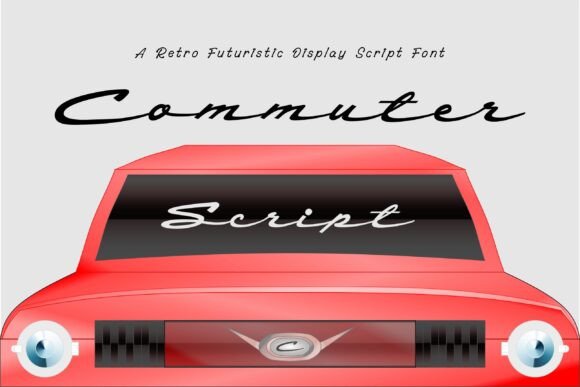
At first glance, Commuter Script is unmistakably a script font. Its letters flow with a connected, cursive rhythm that feels personal and crafted, like a handwritten font with serious ambition. But look closer, and you’ll see the future. The strokes have a uniformity and structural integrity you don’t often find in traditional scripts. There’s a mechanical precision to its curves and terminals, a subtle stiffness in some of its connections that speaks to engineering and design rather than pure calligraphy. This isn’t a font trying to mimic a centuries-old quill; it’s a font imagining what a signature might look like on the dashboard of a spacecraft or the masthead of a futuristic newspaper.
The overall personality is one of confident motion. It feels fast, efficient, and stylish. The letterforms have a slight slant that propels the eye forward, creating a natural sense of direction and energy. Unlike more ornate or chaotic display fonts, Commuter Script maintains a surprising level of clarity within its stylistic flair. Each character is distinct, designed to work in harmony to create words that are both visually striking and legible at scale. This balance is its greatest strength. It’s a creative font that doesn’t sacrifice function for form, making it a versatile tool in a designer's arsenal of design assets.
Where the Rubber Meets the Road: Practical Applications
Understanding a font’s personality is one thing; knowing where to deploy it is another. The true value of a typeface like Commuter Script lies in its application. Its unique blend of retro charm and futuristic edge makes it a powerhouse for specific types of projects where brand identity and visual impact are paramount.
- Logo Design and Branding: This is Commuter Script’s home turf. For a brand that wants to project innovation, speed, or a premium, forward-thinking ethos, this font is a natural fit. Think of a boutique electric car company, a high-end audio tech brand, a craft cocktail bar with a retro-futuristic theme, or a modern delivery service. It creates a logo design that is instantly memorable and packed with personality. It tells customers this brand is both classic and cutting-edge.
- Packaging Design: On a shelf crowded with minimalist sans serif and traditional serif fonts, Commuter Script can be a showstopper. It’s perfect for products that blend craftsmanship with technology: artisanal coffee roasters, specialty hot sauces, boutique spirits, or even high-end tech accessories. The font gives the product a story before the customer even reads the label, suggesting a unique process or a superior experience.
- Digital and Social Media Graphics: In the fast-scrolling world of social media, grabbing attention in a split second is everything. Commuter Script excels as a headline or title font for Instagram posts, YouTube thumbnails, or website banners. It adds an immediate layer of professionalism and style that a standard system font cannot match. It makes a graphic look intentionally designed, which builds trust and engagement.
- Editorial and Web Design: While it’s not a body text font, its role in editorial design and web design is crucial. Use it for magazine covers, pull quotes, chapter headings, or website hero sections. Paired with a clean, readable sans serif font for body copy, it establishes a powerful visual hierarchy, guiding the reader’s eye and setting the publication’s tone. It’s the font equivalent of a bold, graphic headline in a major newspaper.
Making It Work: A Practical Guide to Using Commuter Script
Choosing a premium font is an investment, and like any good design decision, it requires thoughtful application. Simply dropping Commuter Script into a project isn’t enough. To truly leverage its power, you need to consider context, pairing, and readability.
Evaluating Project Fit and Personality
Before you commit, ask yourself: does this project’s core message align with the font’s personality? Commuter Script communicates innovation, speed, style, and a touch of nostalgia. It’s an excellent choice for a tech startup, a motorsport brand, or a retro-themed event. It might be a less appropriate choice for a traditional law firm, a children’s daycare, or a purely rustic, handcrafted brand. The goal is for the typography to support the brand’s story, not contradict it. Its strength as a display font means it’s built for impact, not for setting long paragraphs of text.
The Art of the Font Pairing
No font is an island, especially a bold display script. The key to a professional design is a thoughtful font pairing. Commuter Script’s intricate, high-energy style needs a calm, stable partner to create balance and ensure overall readability. Your best bet is a simple, geometric sans serif font or a clean, modern serif font.
- With a Sans Serif: Pair it with a font like Montserrat, Lato, or Futura. The clean lines and simple forms of the sans serif will act as a perfect counterpoint, allowing the script to shine without overwhelming the design. Use the sans serif for subheadings, body text, and navigation.
- With a Serif: For a more sophisticated or editorial feel, try pairing it with a contemporary serif like Playfair Display or a slab serif like Rockwell. This combination can feel both classic and dynamic, perfect for a high-end magazine or a luxury brand identity.
The general rule is to create contrast. A handwritten font style like Commuter Script pairs best with something structurally different. Avoid pairing it with another script or a very decorative typeface, as this will create visual chaos.
Readability, Licensing, and Final Checks
Always test your font choices in context. View your design on both a desktop monitor and a mobile phone screen. Print it out if it’s for a physical product. Is the headline legible at a distance? Do the letterforms blur together at smaller sizes? For a display font, the goal is to be eye-catching, not eye-straining. Use it at larger sizes where its unique character can be fully appreciated.
Finally, always be mindful of the commercial font license. A quality font like Commuter Script comes with a license that outlines how you can use it—for example, in logos, on websites, in apps, or on merchandise for sale. Read the End User License Agreement (EULA) to ensure your use is covered. This professionalism protects both you and the font’s creator, and it’s a hallmark of a serious designer or business owner. By thoughtfully integrating a modern typography